

Oral Health


CBD seems to be everywhere lately—from coffee to face cream to dog treats. But when it comes to your mouth, is there real science behind it, or is it just wellness marketing? We dug into the peer-reviewed research. Here's what we found.
What Is CBD?
CBD, or cannabidiol, is one of over 100 naturally occurring compounds in the cannabis plant. Unlike THC (the compound that makes a person “high”), CBD is completely non-psychoactive. It won't alter your mind, won't show up on a drug test, and is federally legal when derived from hemp.
Here's why it matters for your mouth: your gums are loaded with cannabinoid receptors, specifically CB1 and CB2 receptors. These are part of your body's endocannabinoid system, which helps regulate inflammation, pain, and immune response.
Think of it this way: your mouth already has the locks. CBD is just a key that fits.
Let's get to the science. Multiple peer-reviewed studies have investigated how CBD affects oral health:
It Fights Harmful Bacteria
A 2020 study compared CBD to commercial oral care products and found something interesting: CBD significantly reduced bacterial content from dental plaque.1 The researchers tested it against several strains, including Streptococcus mutans (the main cavity-causing culprit) and bacteria linked to gum disease.
The result? CBD performed comparably to traditional products, and it did so without the addition of harsh chemicals.
It Calms Inflammation
Gum disease isn't just about bacteria. It's about your body's inflammatory response to that bacteria—the swelling, redness, and bleeding that eventually damages tissue and bone.
Research shows that cannabinoids like CBD have anti-inflammatory properties that can help reduce this inflammatory response in gum tissue.2 That matters because chronic inflammation in your gums doesn't stay local—it can contribute to inflammation throughout your entire body.
It May Help Protect Bone
Here's where it gets interesting. A 2009 study in rats with induced gum disease found that CBD helped decrease bone resorption—the process where you lose the bone holding your teeth in place.3
Now, this was an animal study, so we need more human trials. But the mechanism makes sense: by reducing inflammation and modulating immune response, CBD appears to help protect the structural support of your teeth.
It Has Pain-Relieving Properties
Anyone who's dealt with sensitive gums or a toothache knows pain management matters. Research on cannabinoids shows they have natural analgesic properties that could apply to oral discomfort.4
When you brush with CBD toothpaste, the cannabinoid interacts with CB2 receptors in your gum tissue. These receptors are especially abundant in immune cells.
This interaction leads to four key actions:
Reduces inflammatory signaling – Less inflammation means less swelling, redness, and bleeding
Modulates immune response – Helps your body respond appropriately without overreacting
Inhibits bacterial growth – Creates an environment where harmful bacteria struggle
Supports tissue repair – May promote healing of damaged gum tissue. It's not magic. It's your body's own systems working more effectively.
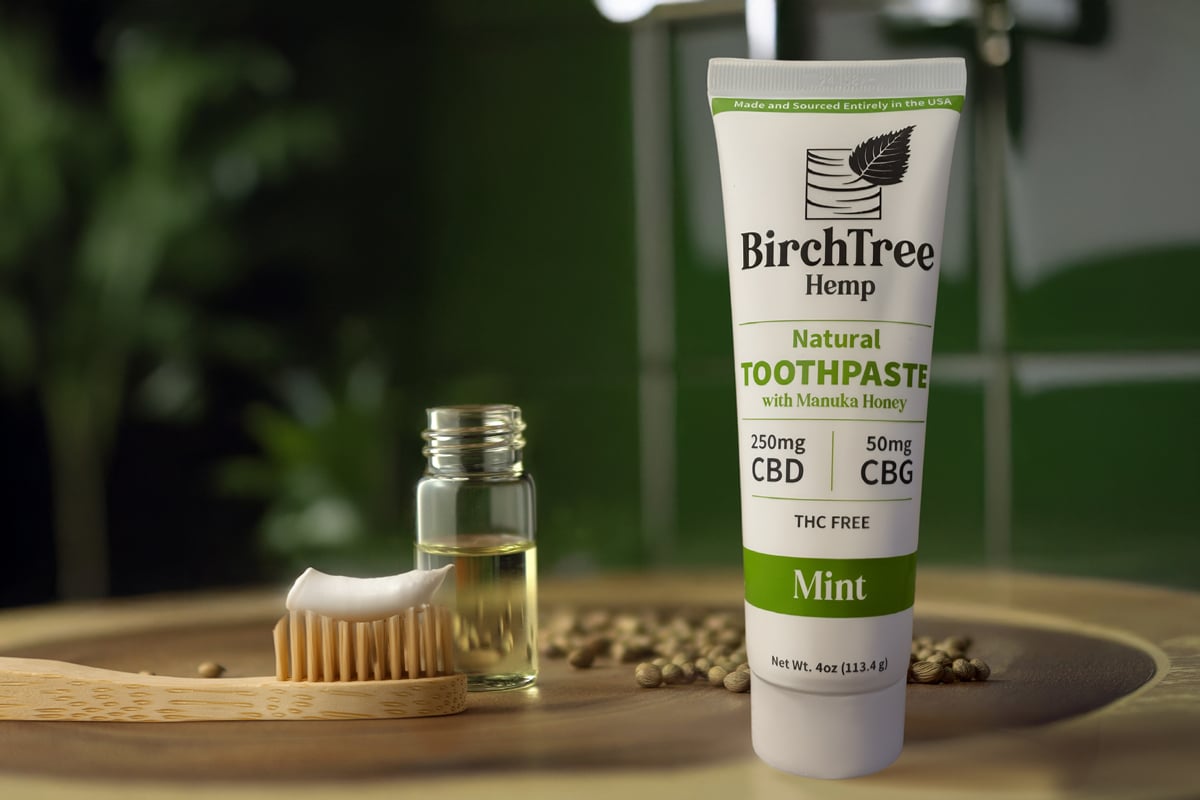
Not all CBD products are created equal. You'll see two main types:
CBD isolate is pure cannabidiol with everything else removed. It's working alone.
Full-spectrum hemp extract contains CBD plus other beneficial compounds naturally found in hemp—minor cannabinoids like CBG and CBC, terpenes (aromatic compounds), and flavonoids. These work together in what researchers call the "entourage effect."
Studies suggest this combination enhances therapeutic benefits beyond what isolated CBD provides.5 It's like the difference between taking a vitamin C pill versus eating an orange. The whole food gives you synergistic nutrients working together.
CBD won't replace good oral hygiene. You still need to brush twice daily, floss, and see your dentist.
But when you brush with toothpaste containing full-spectrum hemp extract alongside other beneficial ingredients, you're doing more than cleaning. You're actively supporting gum health, reducing inflammation, and creating an environment where beneficial bacteria thrive while harmful ones struggle.
Think of CBD as a research-backed addition to your oral care routine, not a replacement for the basics.
CBD toothpaste isn't riding a wellness trend. There's legitimate, peer-reviewed science showing cannabidiol has anti-inflammatory, antimicrobial, and potentially protective effects for oral health.
Is more research needed? Absolutely. The field is young, and long-term human trials would strengthen the evidence. But what exists now is promising enough that dental researchers are actively investigating further applications.
When you're choosing oral care products, you deserve ingredients backed by actual research. Based on the current science, CBD appears to be one of them.